Trust, Labels, and the Big Box Illusion: Why Small Farms Matter
Why small farms matter has become clearer than ever in today’s food system. For decades, consumers have been taught to trust big-box labels and glossy packaging while overlooking the transparency, quality, and honesty small farms offer. At Little Yardley Farm, we’ve experienced firsthand how misleading labels can be—and why choosing local truly makes a difference.
In fact, the more we went down the rabbit hole, the more our stomachs turned. Government regulations, branding, and marketing have trained consumers to believe that “safe” food must come wrapped in plastic, have an expiration date, and a corporate seal. If it doesn’t come from a big box store, many consumers assume it is somehow less regulated, less safe, or worst, less trustworthy-even when the opposite is true.
Big Verses Small Transparency
The irony is that the most transparent food rarely comes from those brightly lit aisles in the big box stores. Imagine you wanted to see where your eggs came from in your grocery store, so you plan a trip to their processing facility, only to learn it is broken up into many different locations, and to top it off, you need to be escorted through, that is, if you’re even allowed in the facility.
Food you can trust comes from someone whose hands actually touched the soil, someone who can tell you when those eggs were laid or how those animals were raised. A local farmer can answer every single question directly-no labels, no ads, no middleman. You can see the coop, the pasture, the barn, and the whole process. That level of transparency doesn’t exist in industrial food, no matter how you want to put it.
Labels Can Be Misleading
What big retailers have built instead of trust is confidence through distance and trust through marketing, nowhere near a direct relationship with their consumers. A consumer sees a USDA stamp or a slogan like “cage-free” and assumes purity, without knowing how flexible or misleading those terms legally are.
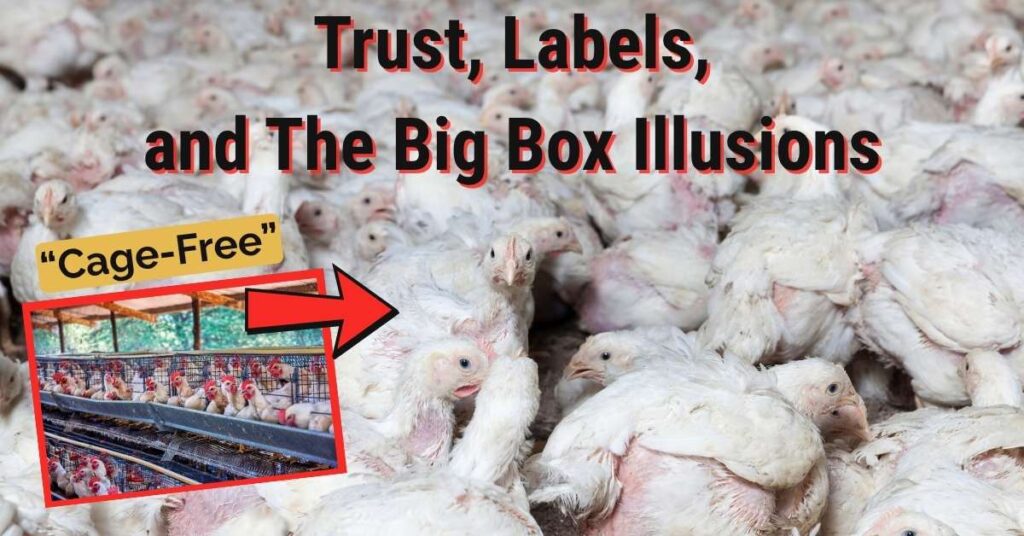
For example, the term “cage-free” sounds great and like the hens have freedom, but in reality, it only means hens are not inside individual cages. They can still be packed wing-to-wing inside a giant industrial-sized barn, never seeing sunlight or grass. Meanwhile, food raised in small batches, with higher welfare and cleaner handling, is viewed with suspicion simply because it lacks a barcode.
Examples of Commonly Misleading Food Labels:
- “Natural” – This term is not a regulated term for most products; these items can still include pesticides, antibiotics, or additives.
- “Cage-Free” – This means chickens may not be in cages, but are often still in overcrowded barns or warehouses with no outdoor access.
- “Free-Range” – This term only requires access to outdoors, but does not necessarily mean animals actually go outside or have space to roam.
- “Pasture-Raised” – This is a very loose term suggesting grazing on pasture, but it is not tightly defined unless paired with a trusted certificate.
- “Farm-Fresh” – Technically has no legal meaning; could come from a large industrial facility.
- “Local” – Retailers can define this term within their own broad radius.
But there is a growing shift: The Educated Consumer.
Educated consumers– the ones who ask questions, read, research, and care about where their food comes from. The educated consumer understands that real food doesn’t need a logo to be legitimate. They know to look beyond packaging and big marketing. They care about their health and have learned enough to choose what’s best for themselves and their families. They prefer local because they’ve learned that the safest food is the food you can trace back not to a warehouse number, but to a farmer’s name.
We Need More Conversations
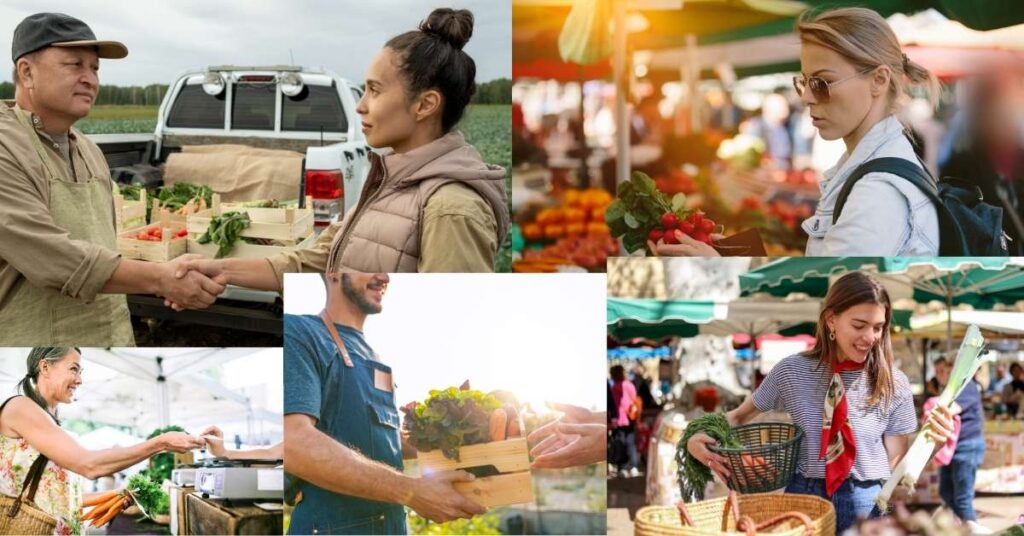
If we want to repair trust in food and in small farmers, we don’t need more labels- we need more conversations. If only more consumers would become more educated on their industrial-sized food, changes might begin to happen. More Questions need to be asked.
We need to buy more locally instead of from major big box stores. We don’t need more regulations and corporate seals. We need more conversations because when you can look into the face of the person who raised your food, you get a sense of safety no label can top. At the end of the day, understanding why small farms matter helps customers make more informed choices about where their food comes from and who they support.
With Love,
Jennifer Yardley
Learn More with Little Yardley Farm
Follow Our Journey: Facebook and/or TikTok